
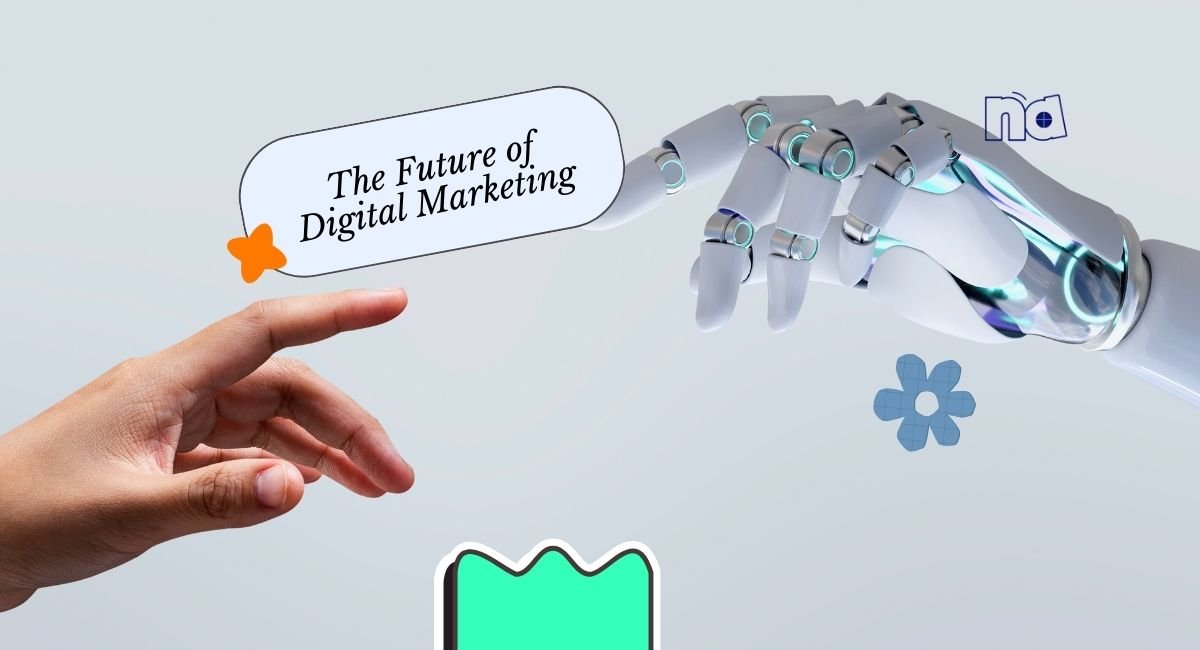
Digital marketing has always been about one thing—connecting with people at the right time, in the right way. But the way we do this is changing fast.
Artificial intelligence (AI) is no longer a futuristic idea. It’s here, and it’s reshaping how businesses reach, engage, and convert customers. From chatbots that answer questions instantly to tools that predict what a customer wants before they even ask—AI is transforming marketing in ways we couldn’t imagine a few years ago.
So, what does this mean for the future of digital marketing? And how can businesses—big or small—use AI to grow? Let’s break it down in simple, human terms.
Why AI Matters in Marketing
In the past, marketing was a guessing game. Businesses placed ads on TV, radio, or billboards and hoped people paid attention. Today, marketing is far more precise. Thanks to data and AI, businesses can predict behaviors, personalize messages, and track results in real time.
Here’s why AI is such a big deal for marketing:
- Speed: AI can analyze huge amounts of data in seconds.
- Accuracy: It finds patterns humans might miss.
- Personalization: It helps create unique experiences for every customer.
- Efficiency: It saves time and resources by automating tasks.
AI allows marketers to spend less time on manual work and more time on strategy and creativity.
How AI Is Changing Marketing Strategies
Let’s look at the biggest ways AI is transforming digital marketing.
- Smarter Customer Insights
AI helps businesses understand customers better than ever. Instead of just knowing someone’s age or location, AI tools can study behavior—what they click, what they ignore, and how they shop.
For example:
- Netflix suggests shows based on what you’ve watched before.
- Amazon recommends products you’re most likely to buy.
This kind of personalization makes people feel understood, which keeps them coming back.
- Hyper-Personalized Marketing
In the past, personalization meant using someone’s name in an email. Today, it’s much deeper. AI can create tailored content, product recommendations, and ads for each person.
Examples:
- Spotify creates custom playlists based on your listening history.
- Ecommerce stores show different homepage banners depending on your browsing behavior.
The more relevant the message, the higher the chance customers will engage.
- Chatbots and Virtual Assistants
You’ve probably chatted with a bot on a website before. That’s AI at work.
AI-powered chatbots answer questions instantly, 24/7. They can:
- Help customers track orders.
- Answer FAQs.
- Guide people to the right product or service.
This saves businesses money on customer support while giving customers fast, accurate answers.
- AI-Powered Content Creation
AI is helping marketers create content faster. Tools can now generate blog outlines, write ad copy, and even create images or videos.
For example:
- AI can suggest blog topics based on trending keywords.
- It can write multiple ad variations to test what works best.
- It can generate social media captions that match your brand’s tone.
Of course, human creativity is still essential. But AI makes the process faster and more efficient.
- Predictive Analytics
AI doesn’t just analyze the past—it predicts the future. By looking at patterns in data, AI can forecast what customers are likely to do next.
This helps businesses:
- Predict which leads are most likely to buy.
- Plan inventory based on demand.
- Choose the best time to launch campaigns.
Predictive analytics allows marketers to stay ahead instead of reacting too late.
- Smarter Advertising
Ads used to be one-size-fits-all. Now, AI makes them smarter. Platforms like Google Ads and Facebook Ads use AI to:
- Decide which audiences see your ad.
- Adjust bids automatically to maximize results.
- Show ads at the best time of day.
This makes advertising more efficient and less wasteful, especially for businesses with smaller budgets.
- Voice Search and AI Assistants
With Alexa, Siri, and Google Assistant, more people are searching with their voices. AI is driving this trend, and marketers need to adapt.
Instead of typing “best pizza near me,” people ask, “Where can I get the best pizza nearby?” That means businesses need to optimize content for conversational, voice-based searches.
Voice search is only going to grow, and companies that prepare now will benefit later.
Benefits of AI in Digital Marketing
The biggest benefit of AI is that it makes marketing smarter and more human at the same time. That may sound strange, but it’s true.
Here’s how:
- Customers get personalized experiences that feel like the brand “knows” them.
- Marketers save time on repetitive tasks and focus on big-picture ideas.
- Businesses spend less on wasted ads and get better results.
The combination of automation and personalization is what makes AI so powerful.
Challenges Businesses Face With AI
Of course, AI isn’t perfect. Businesses face challenges when using it, such as:
- Data privacy concerns: Customers want personalization but also want their data protected.
- High upfront costs: Some AI tools can be expensive for small businesses.
- Learning curve: Teams need training to use AI effectively.
- Risk of over-automation: Too much automation can feel cold and impersonal.
The solution is balance. Businesses should use AI to enhance human creativity, not replace it.
The Future of AI in Marketing
So, what’s next? Here’s what we can expect in the future:
- More advanced personalization: Marketing will feel less like advertising and more like conversation.
- AI-generated videos and interactive content: We’ll see faster, cheaper production of engaging media.
- Deeper voice and visual search: People will shop and search using pictures and spoken commands.
- Ethical AI use: Transparency and responsible data use will become more important.
One thing is certain—AI will keep evolving, and businesses that adapt early will stay ahead.
How Startups and Small Businesses Can Use AI
The best part? You don’t need to be a big company to use AI. Affordable tools make it accessible for everyone.
Examples for small teams:
- Chatbots for customer service.
- Email automation to send personalized campaigns.
- SEO tools that suggest keywords and optimize blogs.
- Ad automation for smarter targeting.
Even simple steps like these can give startups an edge in a crowded market.
Final Thoughts
The future of digital marketing is here, and it’s powered by AI. From chatbots to predictive analytics, AI is changing how businesses connect with customers. It’s making marketing more personal, efficient, and effective.
But here’s the key: AI should never replace human creativity. The best strategies will combine AI’s speed and accuracy with the human touch of storytelling, empathy, and trust.
Businesses that embrace AI now will be ready for the future. Those that don’t may struggle to keep up.
So whether you’re a startup or an established brand, it’s time to explore how AI can transform your growth strategy. The future isn’t coming—it’s already here.